
By: Curtis Loomis
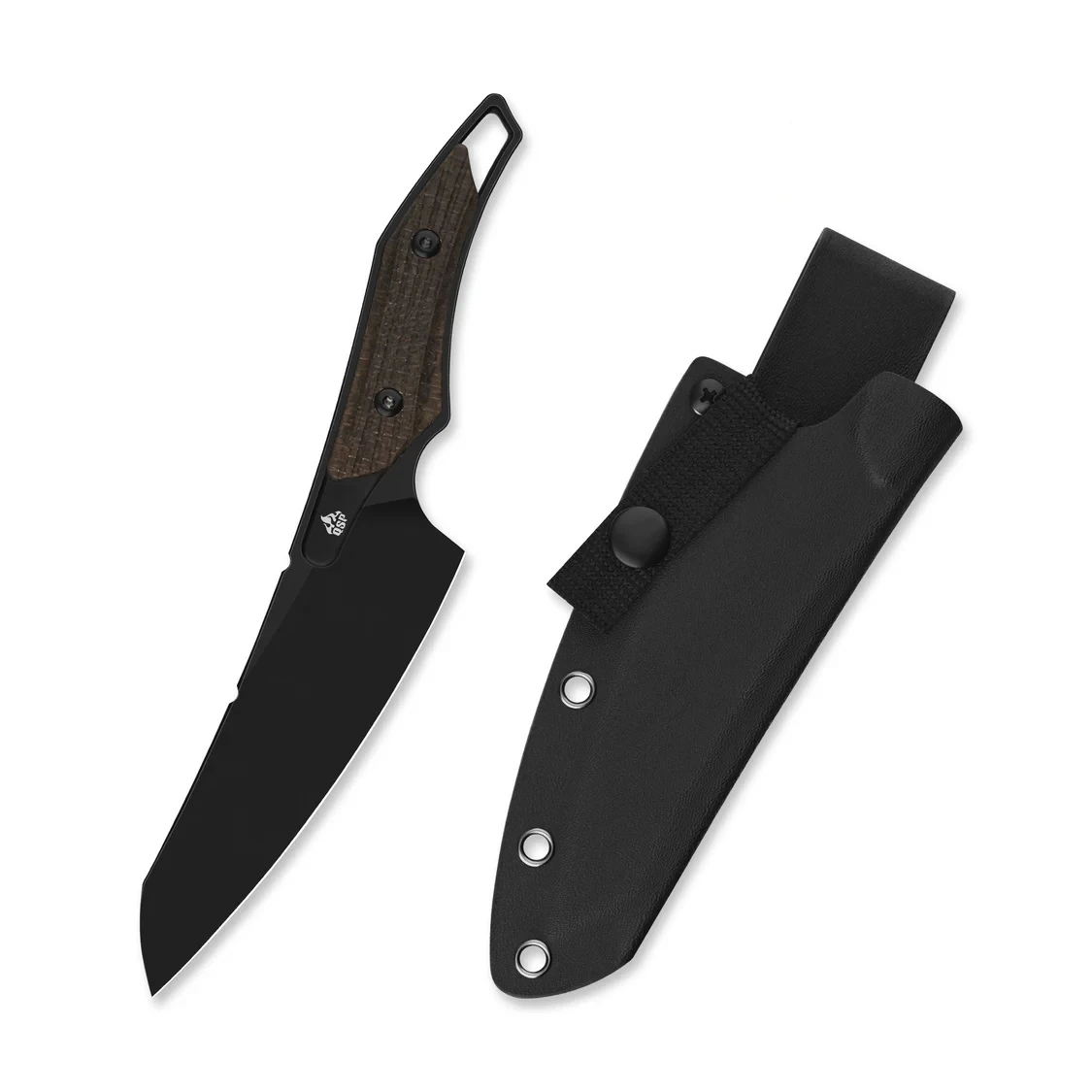
Unboxing a knife like the QSP T-Cook Fixed Blade (QS172-C2) immediately raises an interesting question: is this a camp knife pretending to be a kitchen knife, or a kitchen knife built for the outdoors?
Designed by Maciej Torbe, the T-Cook blends culinary-inspired geometry with rugged outdoor materials. It features a wide, straight-edged blade crafted from Nitro-V stainless steel, paired with a glow-in-the-dark G10 handle (with other versions like Micarta available). On paper, it promises precision slicing with field-ready durability.
But specs only tell part of the story. To really understand what this knife can do, I put it through a series of practical cutting tests—the kind that reflect actual use, not just theory.
Unboxing & First Impressions
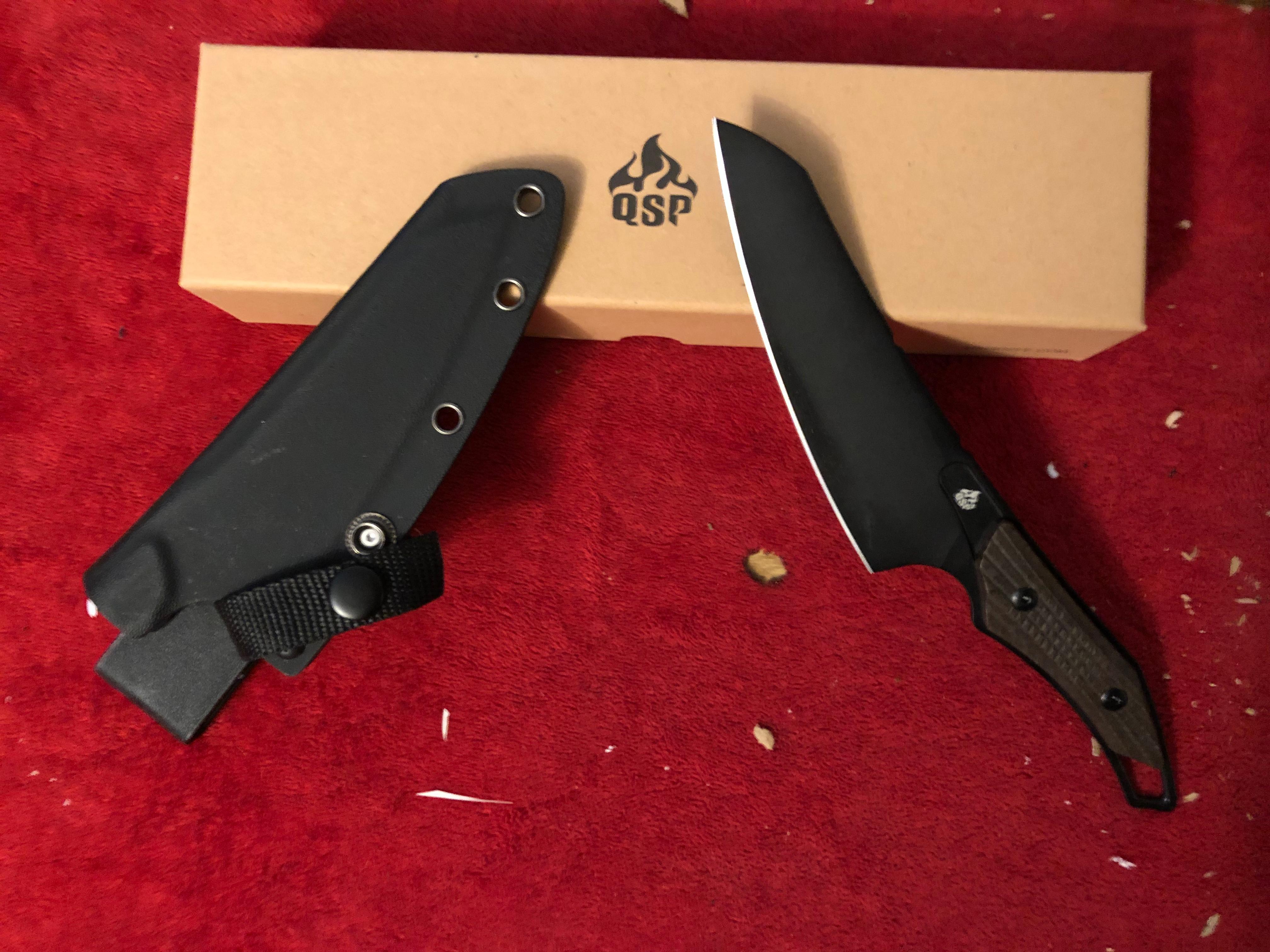
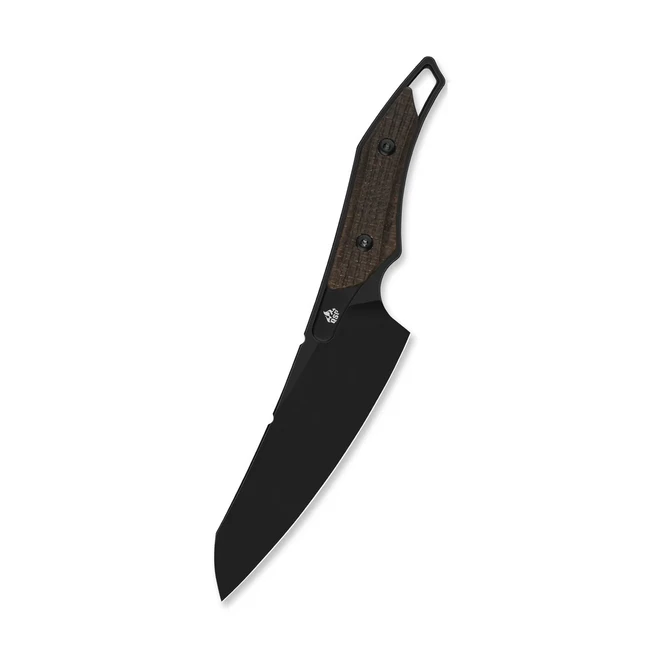
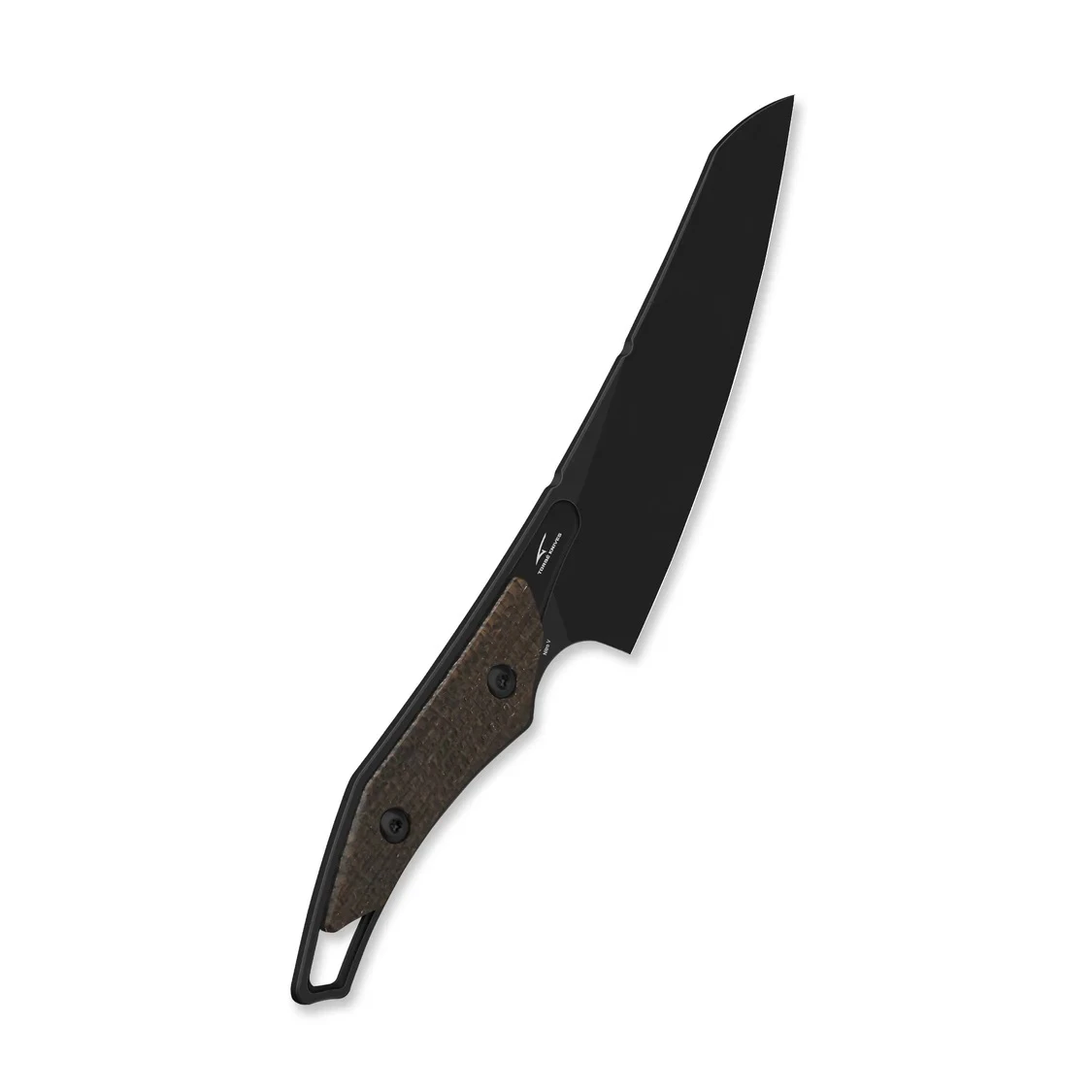
Straight out of the box, the knife feels purposeful. No gimmicks—just a clean, broad blade with a black-coated finish and a handle that subtly glows after light exposure. The included Kydex sheath is solid, offering secure retention and easy carry.
The profile immediately stands out. The blade resembles a sheepsfoot with Wharncliffe influence, giving it a long, flat cutting edge ideal for push cuts and slicing.
Quick Specs Overview
- Blade Length: 5.30 inches
- Handle Length: 4.15 inches
- Overall Length: 9.45 inches
- Blade Steel: Nitro-V Stainless Steel
- Hardness: 59–61 HRC
- Blade Thickness: 0.119 inches
- Grind: Flat
- Weight: 3.40 oz
Lightweight, slim, and well-balanced—it already hints at strong slicing performance.
Design & Materials: Built for Precision and Practicality
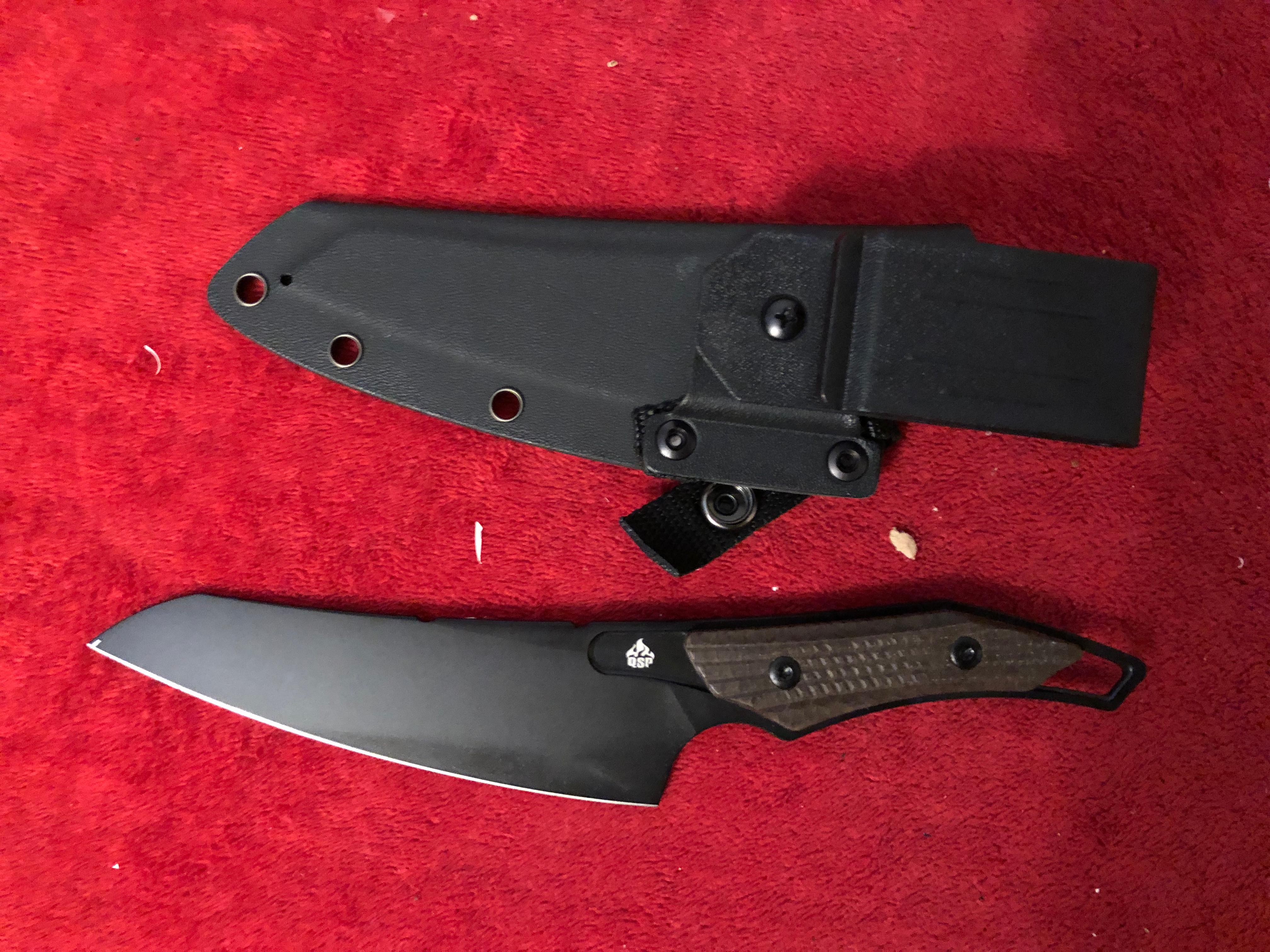
The T-Cook’s design is its biggest strength. It intentionally avoids the thick, overbuilt feel of traditional survival knives.
Blade
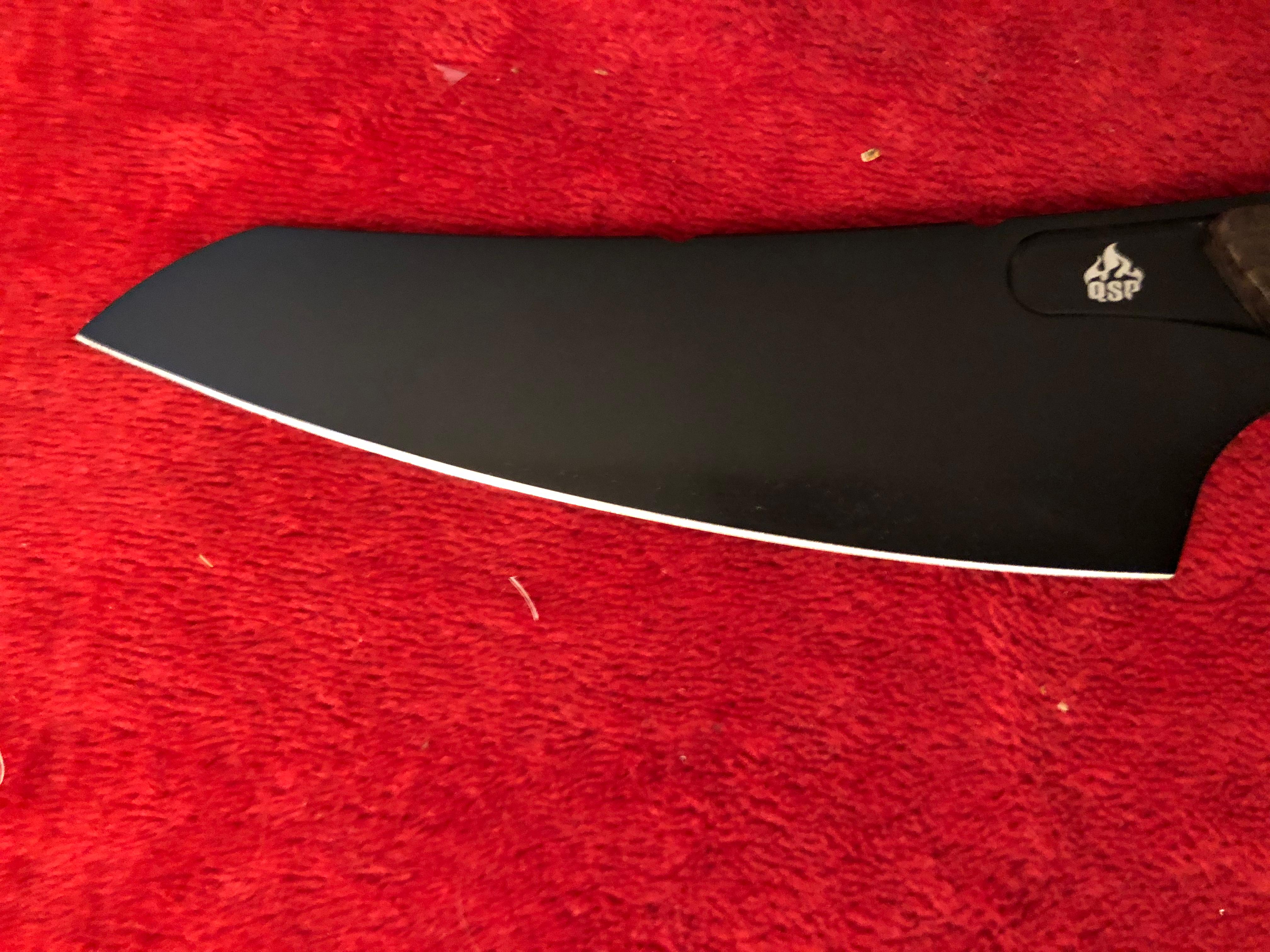
The flat grind combined with a thin blade stock makes it an excellent slicer. Nitro-V steel adds:
- Corrosion resistance (great for food prep and humid environments)
- Good edge retention
- Ease of sharpening in the field
Handle
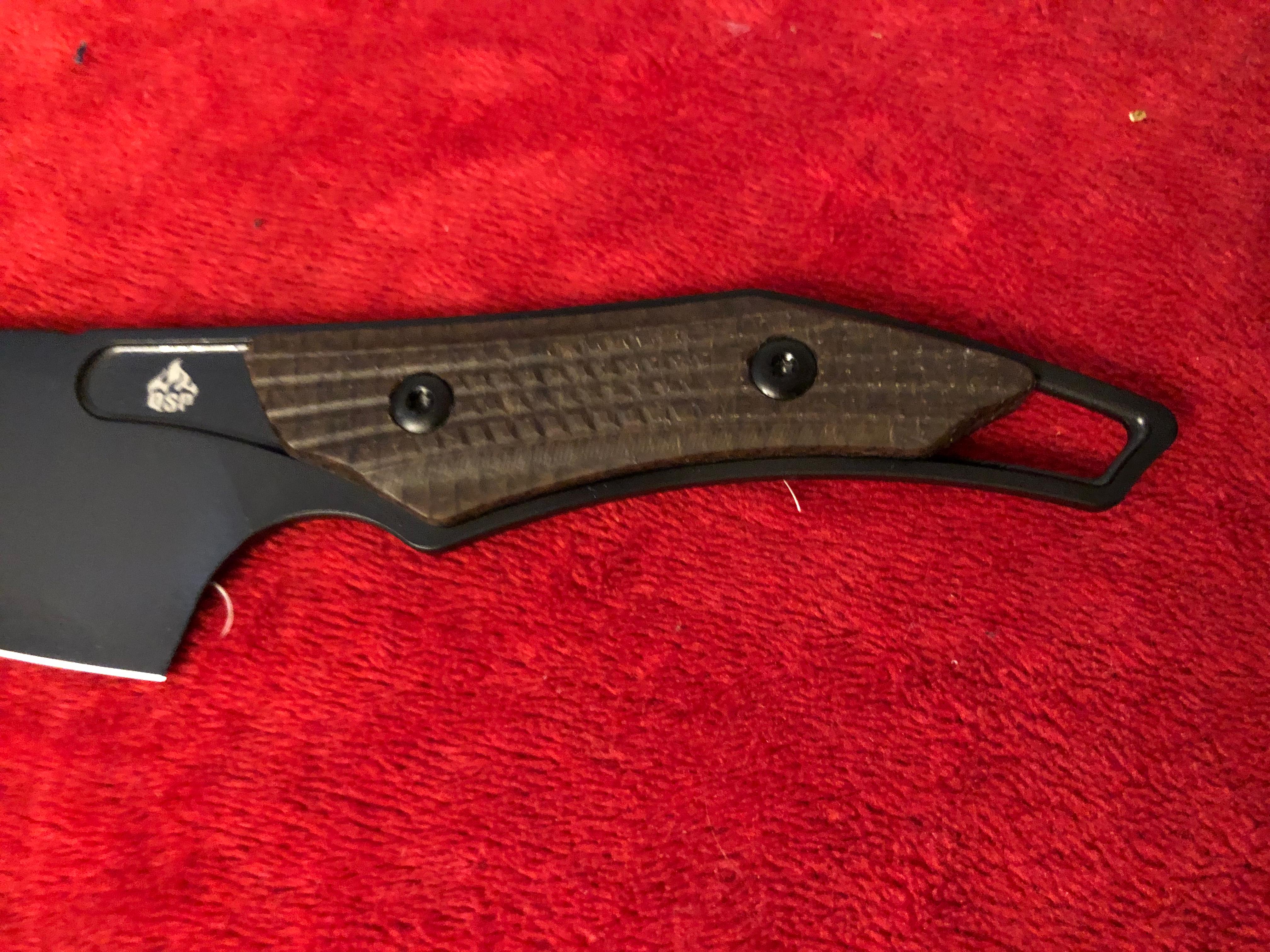
The glow-in-the-dark G10 handle is more than just a visual feature:
- Offers solid grip even when wet
- Resistant to weather and wear
- Easy to locate at night
The ergonomic shaping locks the hand in place without hotspots, even during extended use.
Ergonomics: Comfortable and Controlled
In hand, the knife feels natural. The handle contour supports a variety of grips:
- Standard hammer grip for general tasks
- Pinch grip for food prep
- Controlled push cuts for precision slicing
Even after extended testing, there was minimal fatigue. The balance between blade and handle makes the knife feel agile and responsive.
Real-World Cutting Tests
Now for the real test—how it performs when put to work.
1. Wood Cork Test
This test evaluates control, bite, and edge geometry on a slightly firm but compressible material.
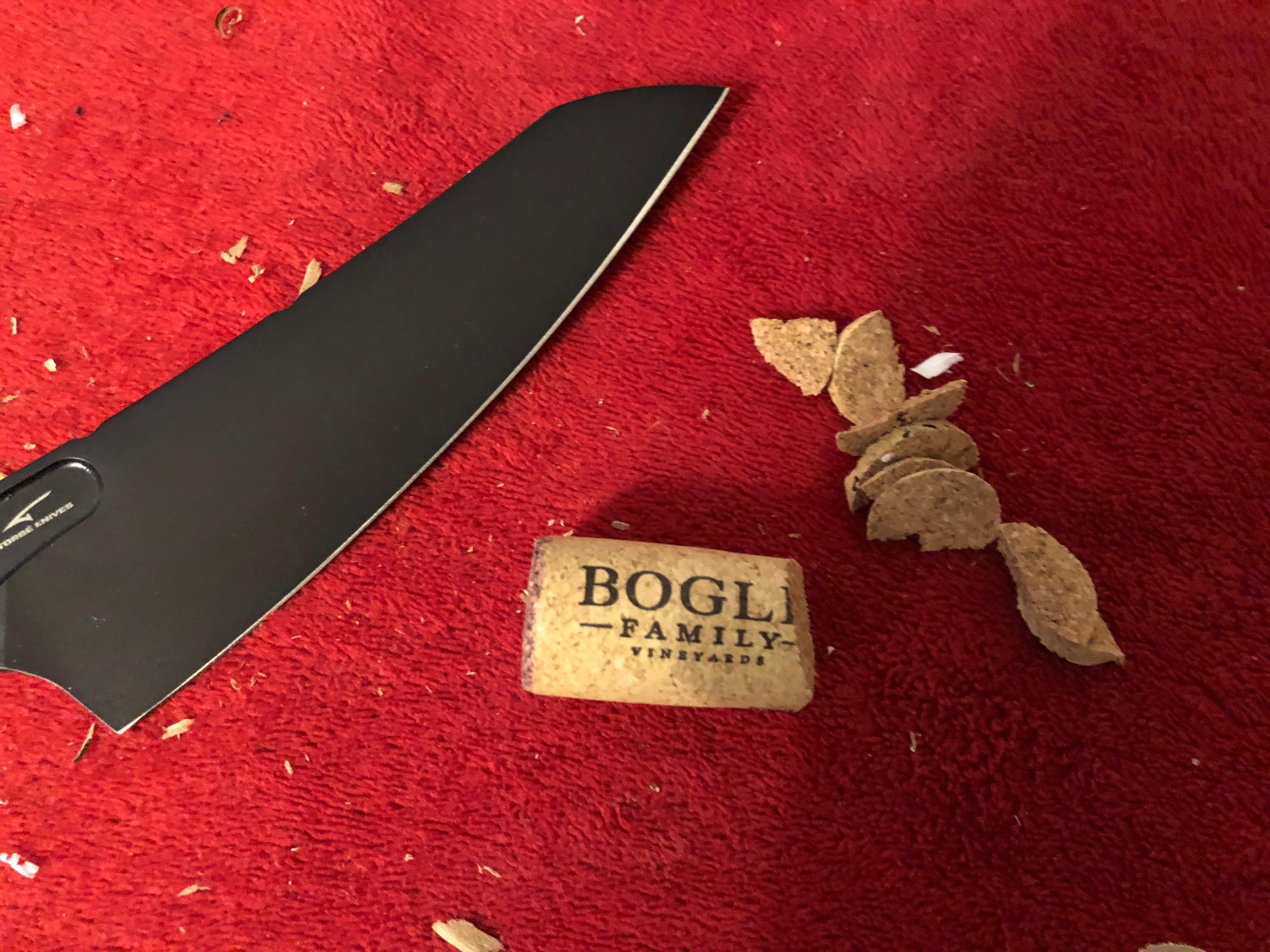
- The blade penetrates the cork cleanly with minimal pressure
- Maintains control without tearing or crushing the material
- Allows for precise, shallow cuts and shaping
Verdict: Excellent control and edge precision—great indicator of slicing efficiency.
2. Paper Cut Test
A simple but revealing test.
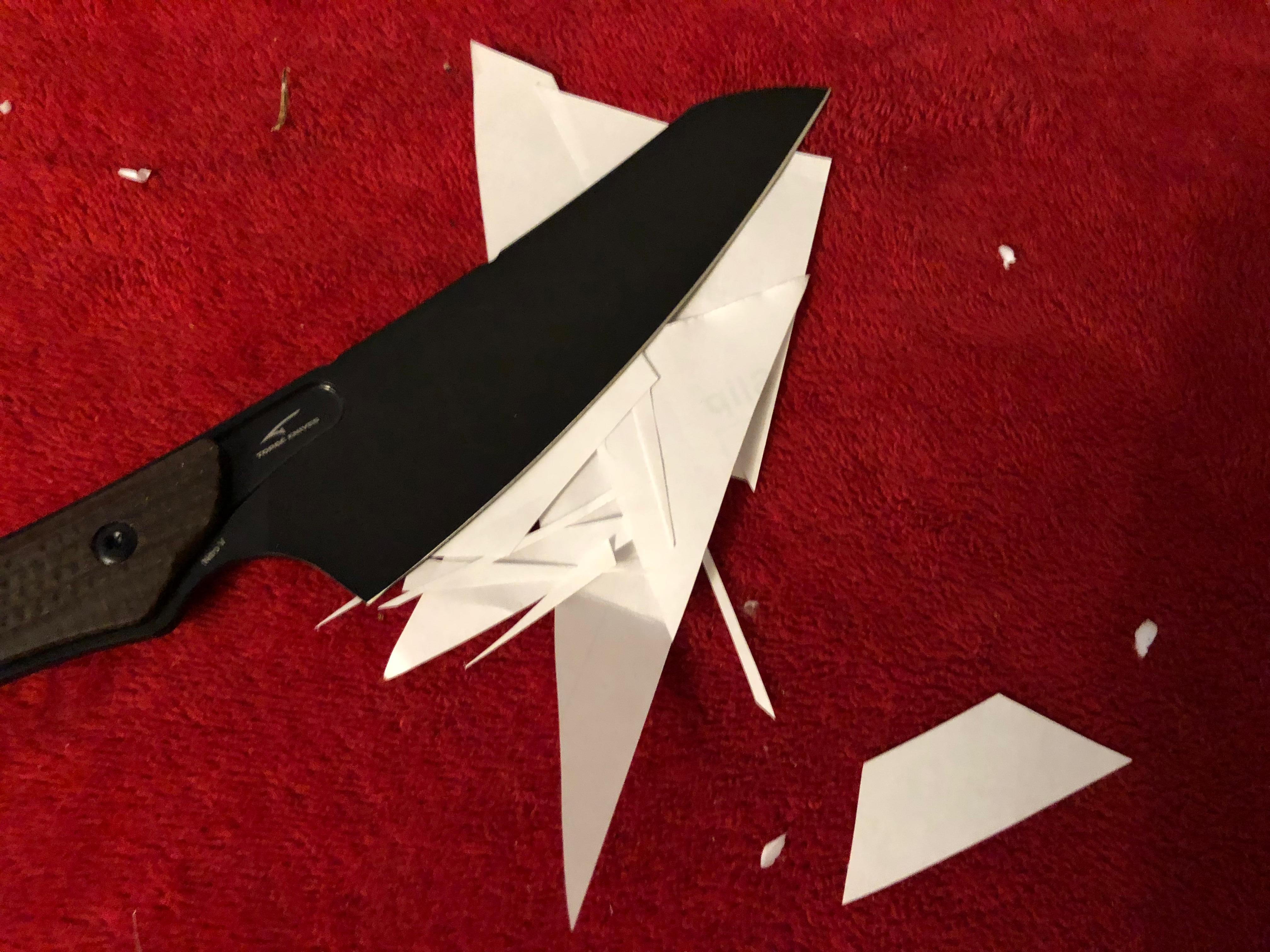
- Smooth, effortless cuts through paper
- Clean slices with no tearing
- Maintains control even on thin strips
Verdict: Precision slicing is a clear strength.
3. Cardboard Cut Test
Cardboard is a real-world edge killer.
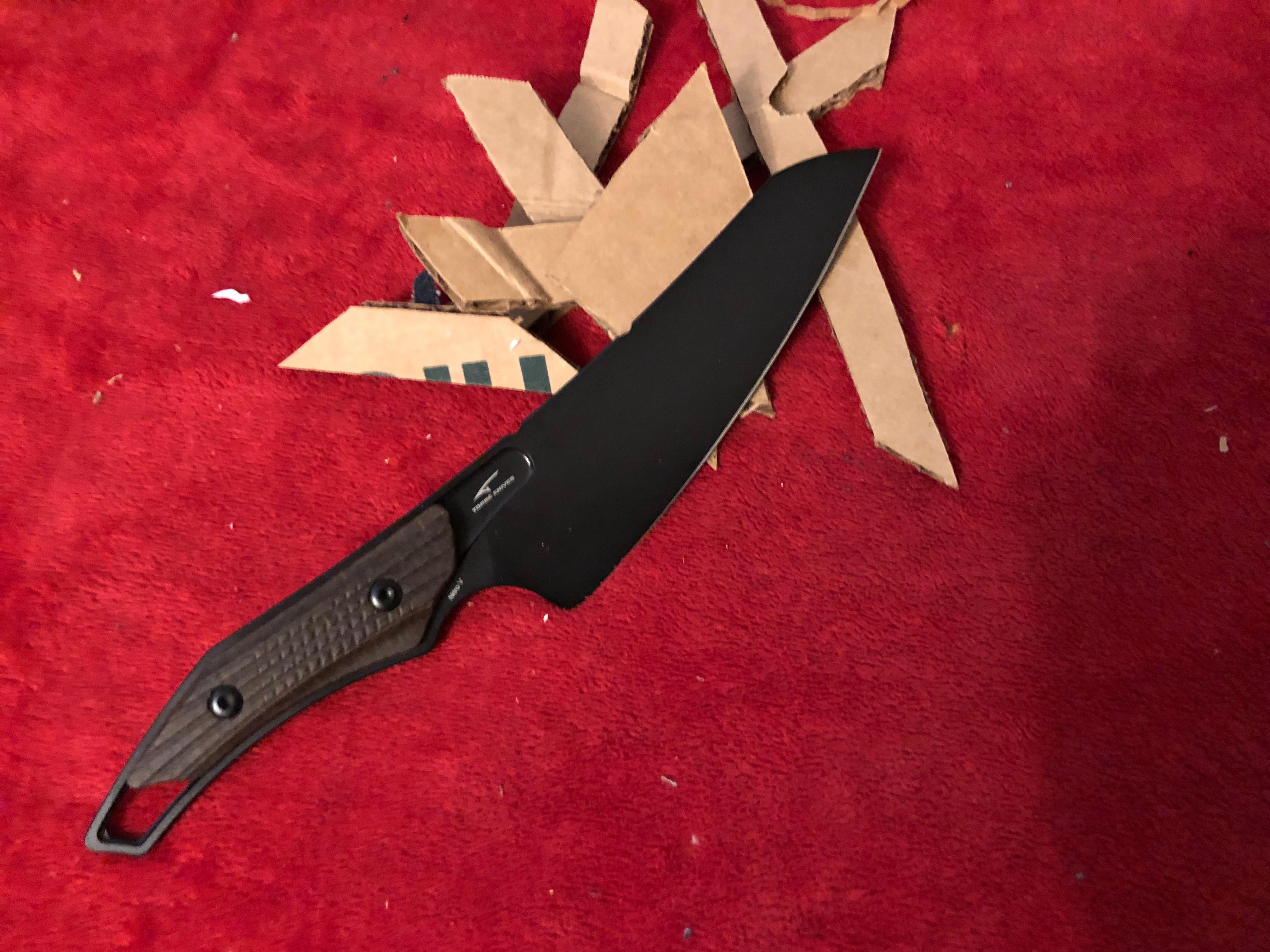
- Glides through single and double-wall cardboard
- Minimal resistance thanks to thin grind
- Edge remained sharp after extended cutting
Verdict: Strong performance with good edge retention.
4. Nylon/Rope Cut Test
Tested on paracord and thicker nylon rope.
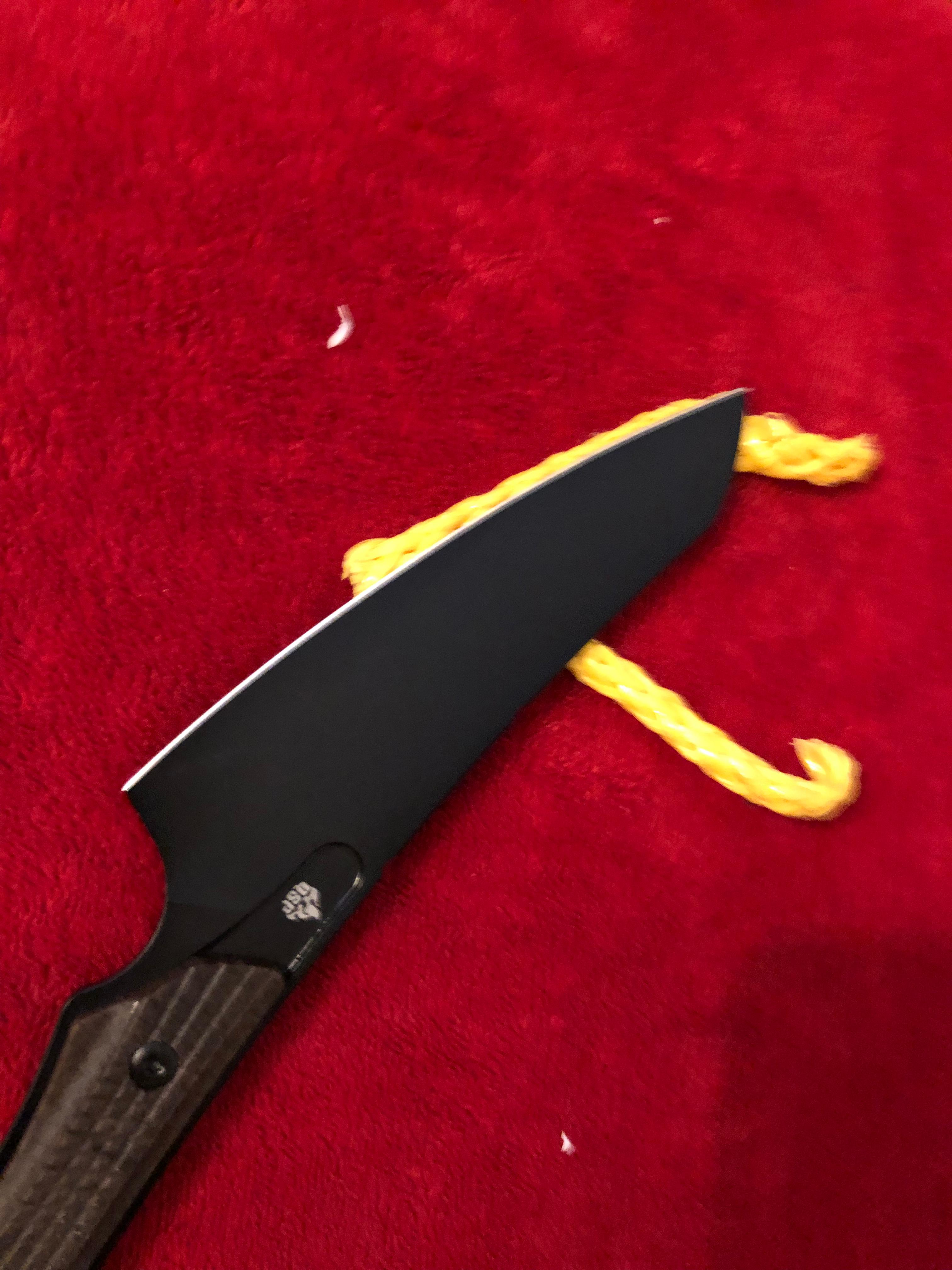
- Clean cuts with minimal sawing motion
- Edge bites quickly and finishes smoothly
Verdict: Reliable and efficient for utility cutting.
5. Denim Cut Test
Denim tests both sharpness and edge aggression.
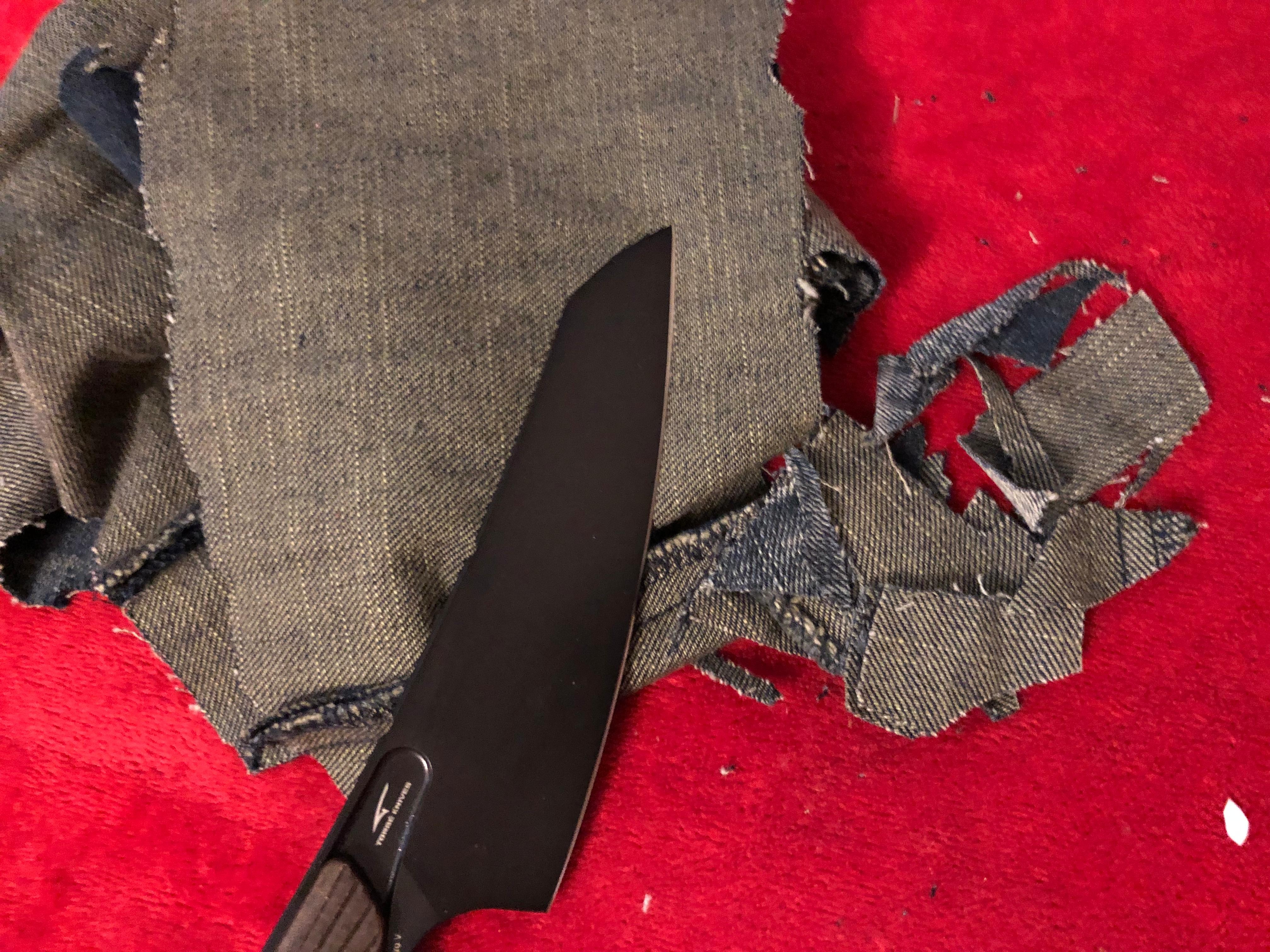
- Sliced through layered denim without slipping
- Maintained consistent cutting power
Verdict: Good balance of sharpness and bite.
6. Wood Shaving Test
Used for feather sticks and light carving.
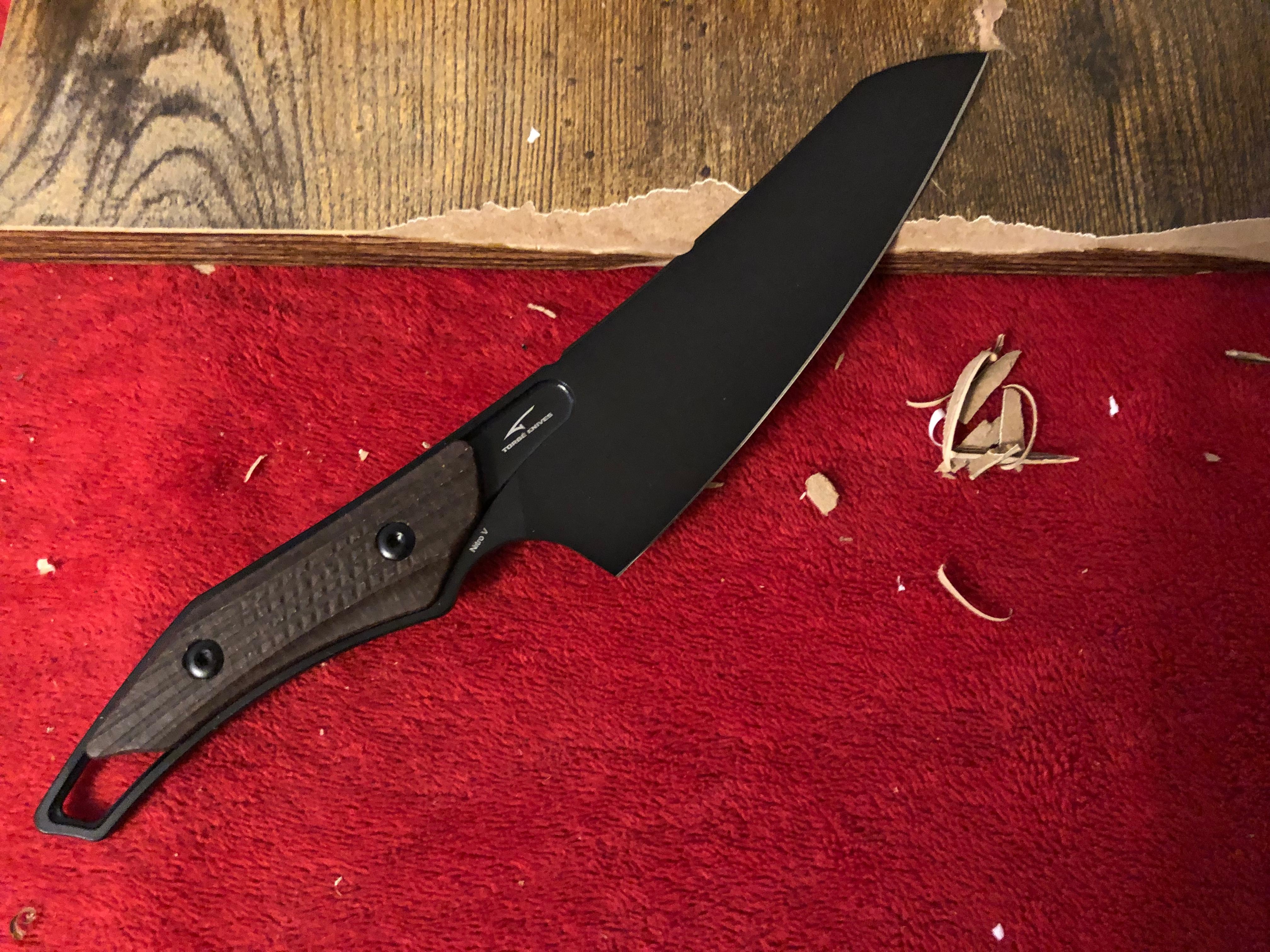
- Produces fine, controlled shavings
- Excellent edge control due to straight blade
- Not designed for heavy carving, but handles light tasks well
Verdict: Great for precision wood work, not heavy bushcraft.
7. Hardened Plastic Cutting Test
Tested on tough plastic materials.
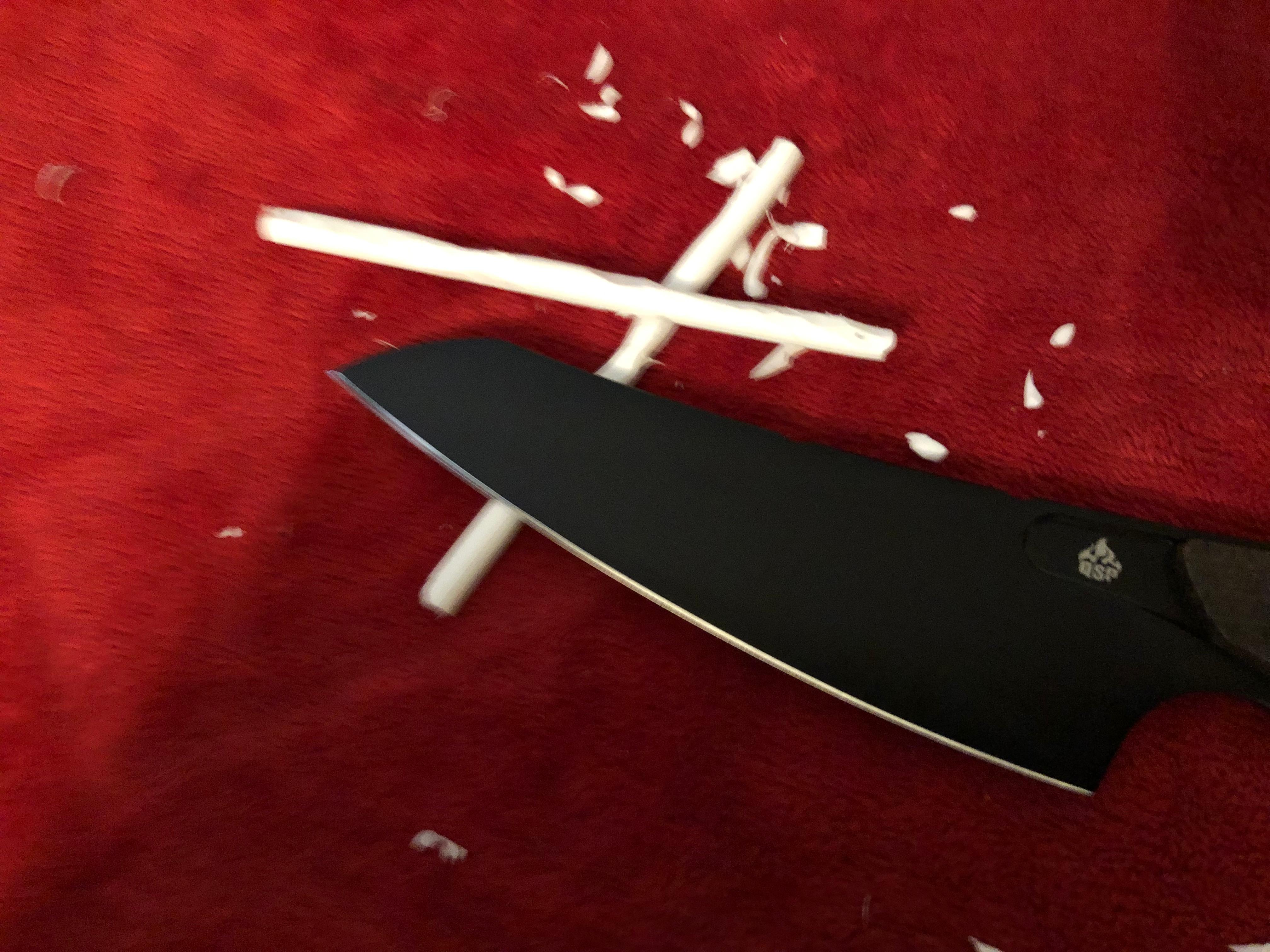
- Cuts cleanly without chipping
- Blade shows good toughness at 59–61 HRC
Verdict: Handles tougher materials without issue.
8. Can Test
A durability check—light cutting on aluminum can.
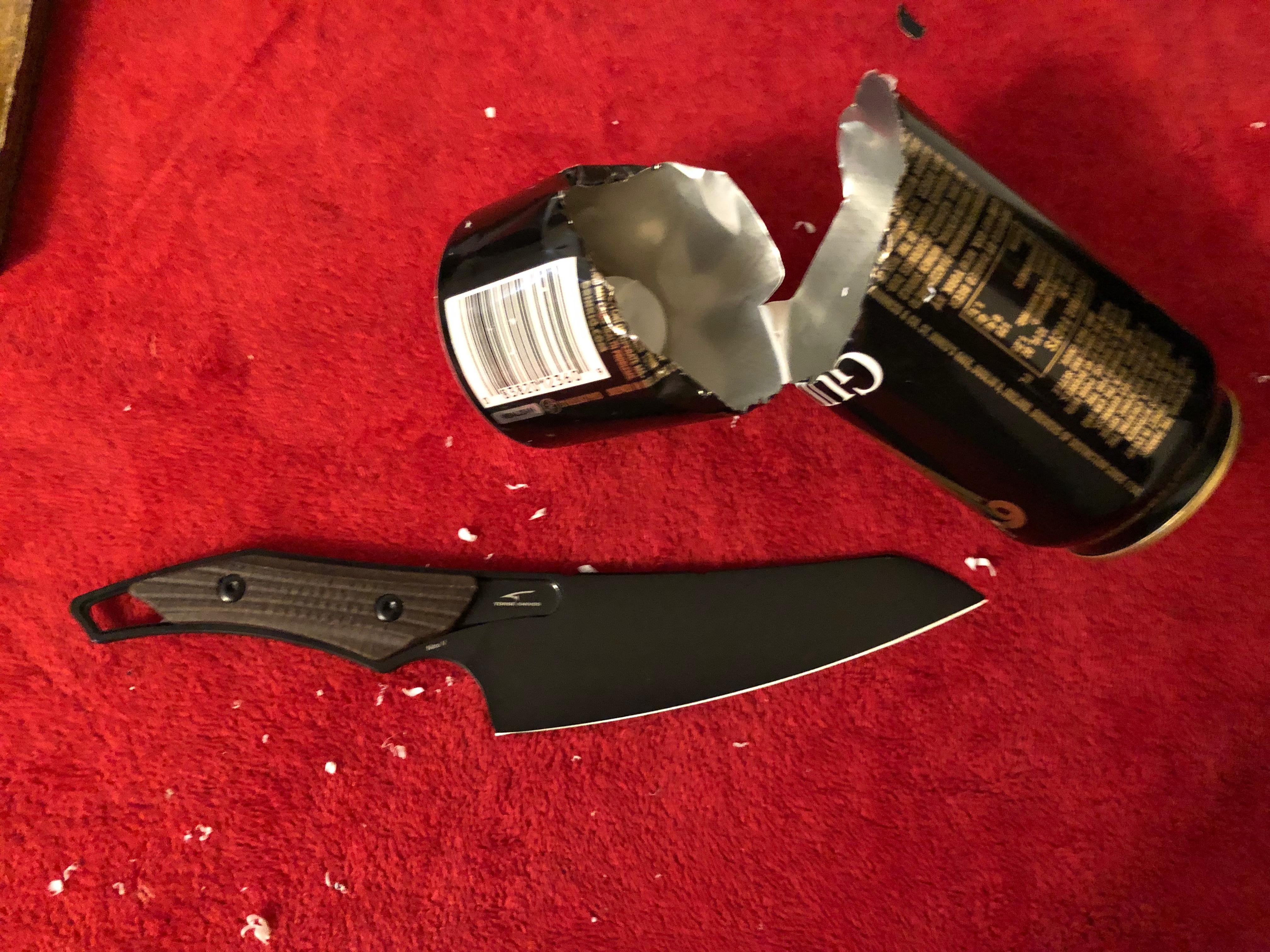
- Coating showed minor wear (expected)
- Edge remained intact with no rolling or chipping
Verdict: Durable enough for occasional misuse, but not recommended as primary use.
Performance Summary
Across all tests, one thing became clear: This knife is built for slicing efficiency, not brute force.
Where It Excels
- Food prep (arguably its strongest category)
- Precision cutting tasks
- Everyday utility
Where It Falls Short
- Heavy-duty chopping
- Batoning wood
- Hard-use survival scenarios
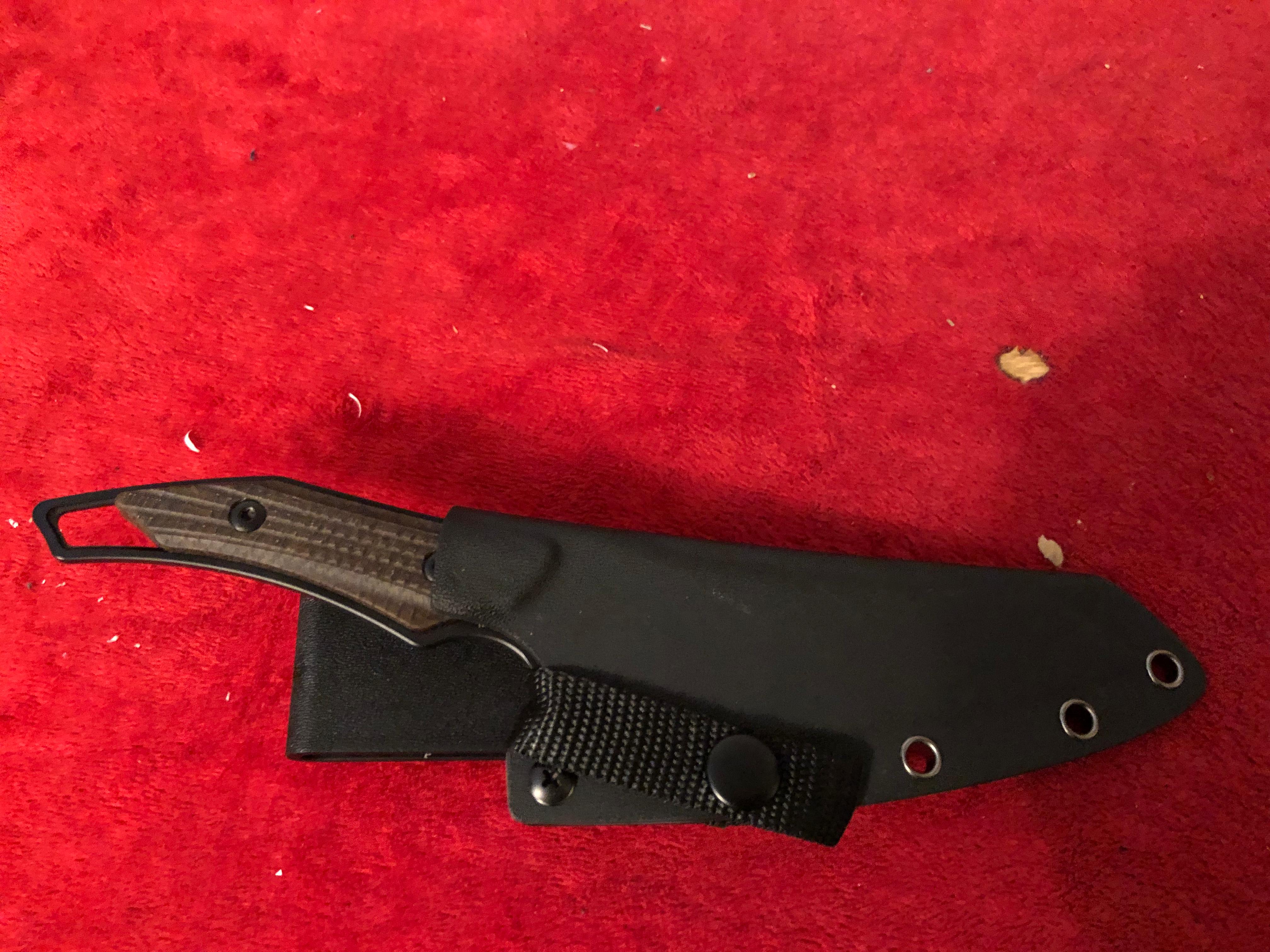
Sheath & Carry
The Kydex sheath is simple and effective:
- Secure retention
- Easy draw
- Lightweight and durable
It complements the knife’s minimalist, practical design.
Pros and Cons
Pros
- Extremely sharp out of the box
- Excellent slicing geometry
- Lightweight and easy to carry
- Comfortable ergonomic handle
- Glow-in-the-dark feature is genuinely useful
- Strong corrosion resistance
Cons
- Not designed for heavy-duty tasks
- Blade style may not appeal to traditionalists
- Coating can show wear with hard use
Final Verdict: A Specialist That Delivers
The QSP T-Cook Fixed Blade is not trying to be a survival powerhouse—and that’s exactly why it succeeds.
It’s a precision-focused outdoor knife that excels in:
- Food preparation
- Light utility work
- Controlled slicing tasks
The combination of Nitro-V steel, thoughtful ergonomics, and unique blade design makes it a standout option for campers, outdoor cooks, and anyone who values efficiency over bulk.
After extensive cutting tests, it’s clear: This knife isn’t just different—it’s purpose-built, and it works.
For more information, pricing, and availability, visit: 👉 https://www.qspknife.com

