
The Journalist Who Inspired a Generation and Brought Las Vegas into the Counterculture
By: Mark J. Bartlett
A Reflection from a Snowstorm
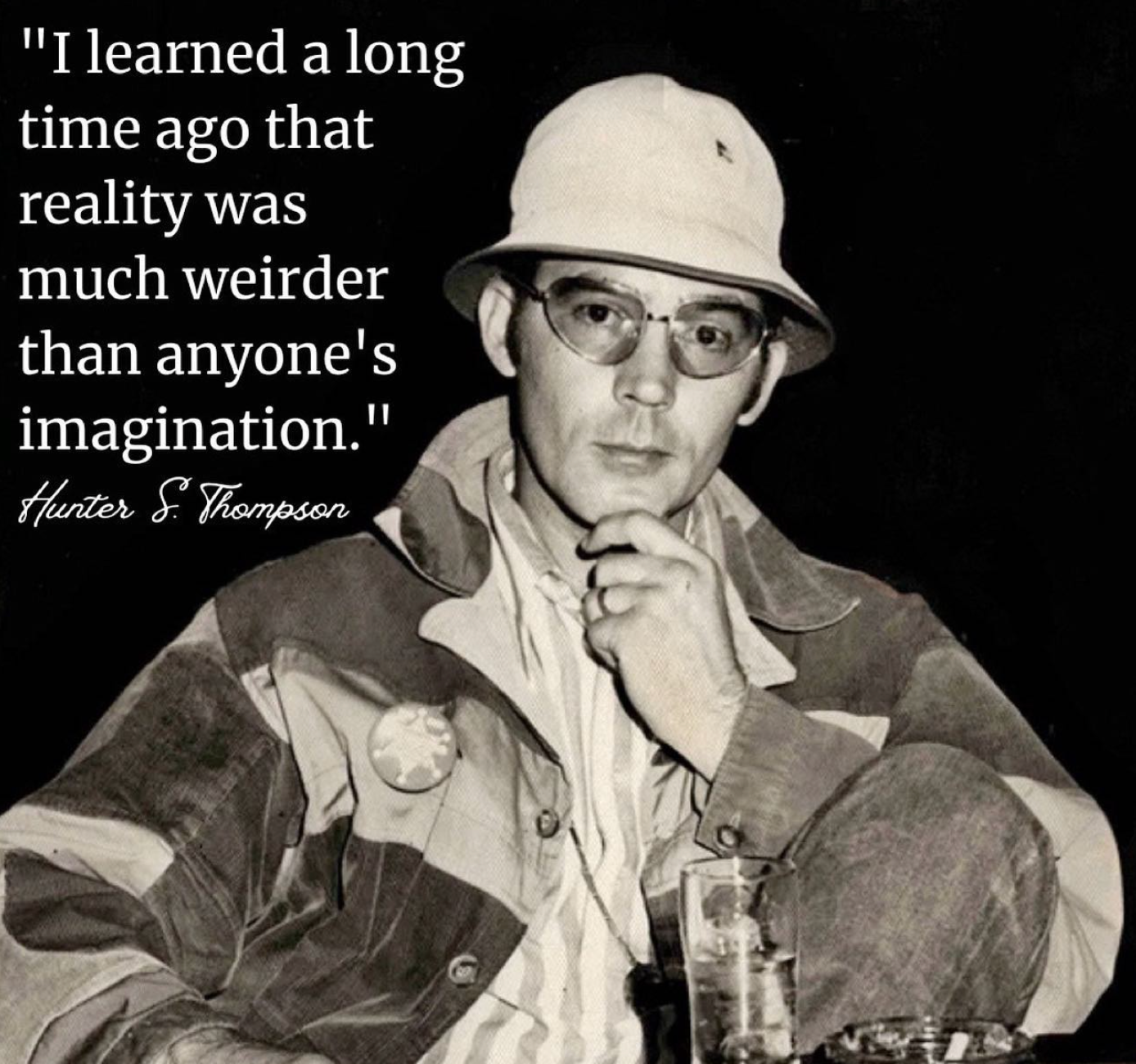
Twenty years ago today, as a New England snowstorm blanketed the East Coast, I received the somber news that Hunter S. Thompson had left us. The storm’s intensity mirrored the profound sense of loss felt by many who admired the groundbreaking journalist and author. Thompson’s fearless approach to storytelling and his creation of Gonzo journalism not only redefined the landscape of American literature but also inspired a generation of reporters to immerse themselves fully in their narratives.
A Short Biography
Hunter Stockton Thompson was born on July 18, 1937, in Louisville, Kentucky. From a young age, he exhibited a keen interest in literature, joining the Athenaeum Literary Association during his high school years. However, his rebellious nature often put him at odds with societal norms. After a brief stint in the U.S. Air Force, where he served as a sports editor for the base newspaper, Thompson ventured into journalism, taking on various writing assignments that would lay the foundation for his distinctive style.


The Circumstances of His Death
On February 20, 2005, at his fortified compound in Woody Creek, Colorado, Hunter S. Thompson died by suicide at the age of 67. His death was a deliberate act, carried out with a firearm in his own home. Thompson had been facing a series of health issues leading up to his death. In accordance with his wishes, his ashes were later shot from a cannon, a fitting tribute to a man who lived life on his own terms.

The Mint 400 and “Fear and Loathing in Las Vegas”
In March 1971, Thompson was commissioned by Sports Illustrated to cover the Mint 400, an off-road desert race held in Las Vegas. What began as a straightforward assignment quickly devolved into a surreal journey, fueled by a cocktail of substances and accompanied by his attorney, Oscar Zeta Acosta. The resulting narrative, “Fear and Loathing in Las Vegas,” transcended traditional sports reporting. Instead of focusing solely on the race, Thompson delved into the hedonistic underbelly of Las Vegas, using the city as a backdrop to explore the disillusionment of the American Dream. The work was first serialized in Rolling Stone magazine before being published as a book in 1972, solidifying Thompson’s place in literary history.


The Gonzo Journalism Style
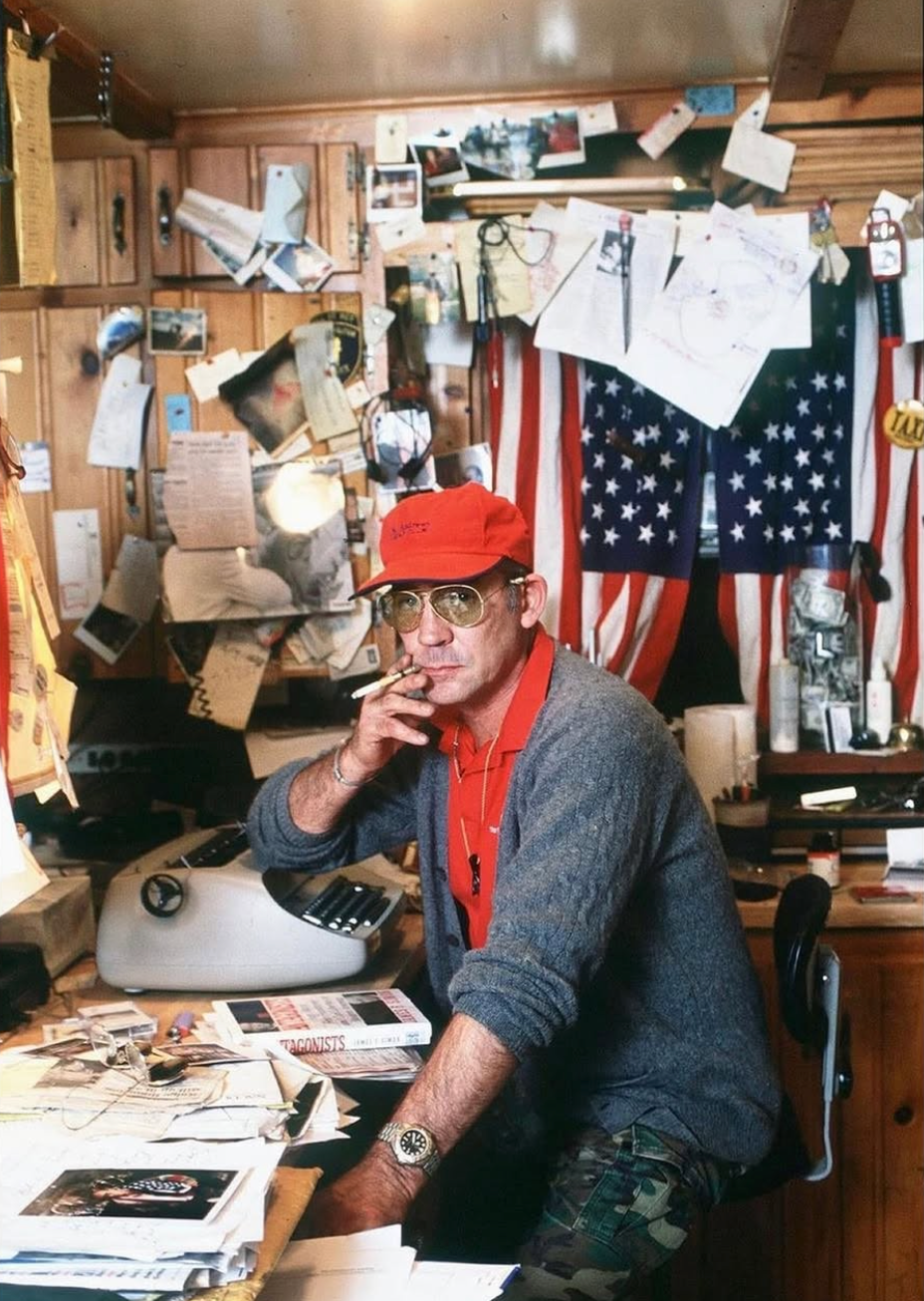
Thompson’s approach to journalism was anything but conventional. Coined as “Gonzo journalism,” his style was characterized by the reporter becoming a central figure within the story, blending fact with fiction in a stream-of-consciousness narrative. This method discarded the pretense of objectivity, embracing a subjective perspective that provided readers with an unfiltered view of events. Thompson’s immersive technique allowed him to capture the essence of his subjects, whether he was riding with the Hells Angels or covering political campaigns. His writing was raw, unapologetic, and infused with a sense of urgency that challenged traditional journalistic norms.

Impact on Luminary Personalities
Thompson’s larger-than-life persona and unique literary voice left an indelible mark on various artists, including actors Johnny Depp, Bill Murray, and John Cusack.
• Johnny Depp: Depp developed a deep friendship with Thompson while preparing for his role in the 1998 film adaptation of “Fear and Loathing in Las Vegas.” He spent considerable time with the author, even residing in his basement, which was reportedly packed with gunpowder kegs. This close relationship allowed Depp to embody Thompson’s mannerisms authentically, bringing the enigmatic writer to life on screen.

• Bill Murray: Murray portrayed Thompson in the 1980 film “Where the Buffalo Roam.” Reflecting on the experience, Murray noted the lasting influence of Thompson’s character, suggesting that once an actor has portrayed Hunter, it’s challenging to distance oneself from his pervasive persona.
• John Cusack: While Cusack never portrayed Thompson directly, he was associated with adaptations of the author’s work and maintained a friendship with him. Cusack’s interactions with Thompson provided him with a unique perspective on the writer’s worldview, influencing his artistic choices and deepening his appreciation for Thompson’s fearless approach to life and literature.
Influence on the Social Media Generation
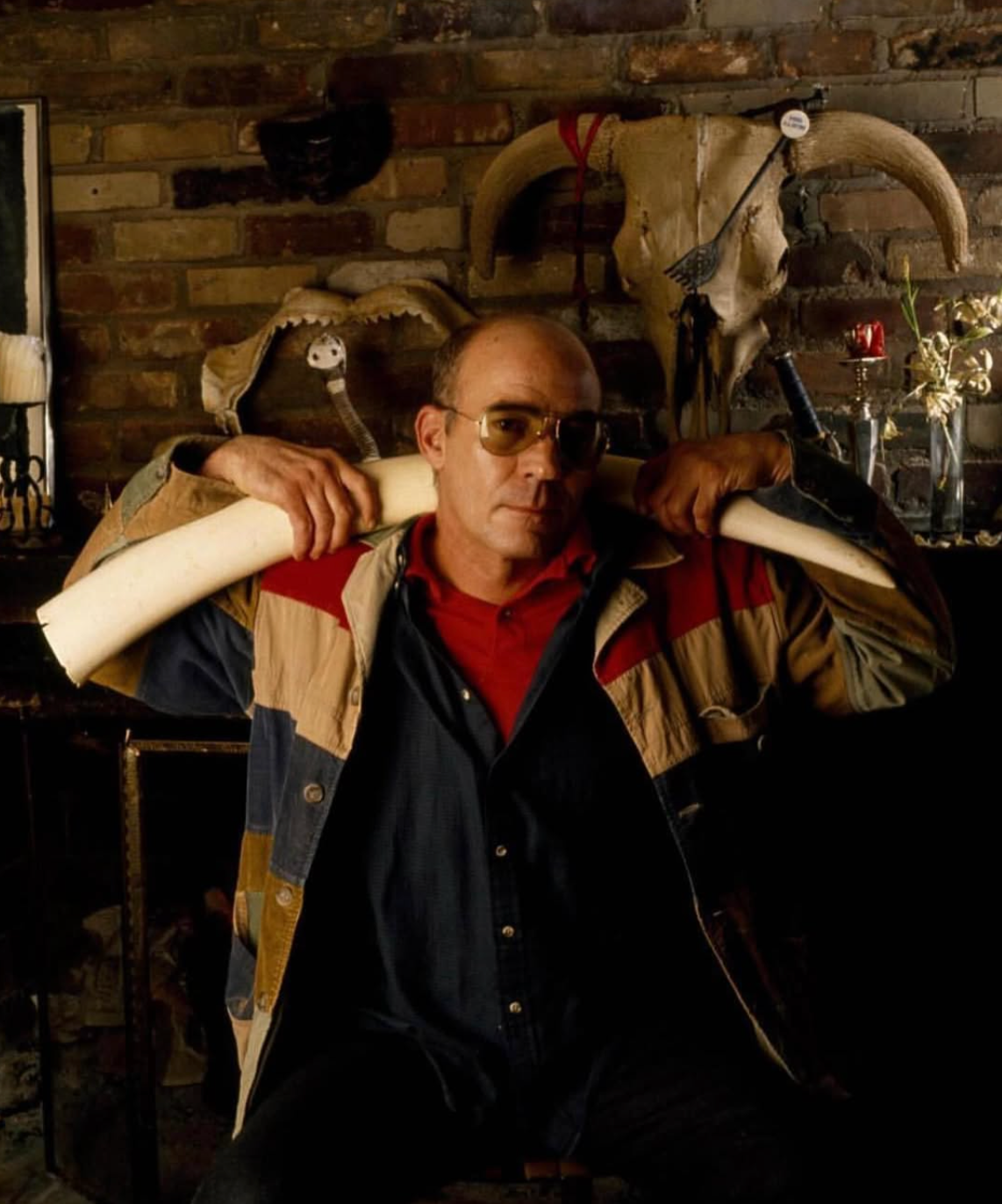
In the digital age, the principles of Gonzo journalism have found a new home among content creators and influencers. The emphasis on first-person narratives, immersive experiences, and the blurring of lines between observer and participant are hallmarks of today’s social media storytelling. Platforms like blogs, vlogs, and podcasts often feature creators placing themselves at the center of their content, echoing Thompson’s immersive style. This approach fosters authenticity and relatability, qualities that resonate with modern audiences seeking genuine connections in an increasingly curated online world.
As we reflect on the two decades since Hunter S. Thompson’s passing, it’s evident that his contributions to journalism and literature continue to reverberate. His fearless exploration of the human condition, unorthodox narrative techniques, and unwavering commitment to truth-telling have inspired countless individuals to challenge conventions and pursue authenticity in their storytelling. Thompson’s legacy serves as a reminder that the most compelling stories often emerge when we dare to immerse ourselves fully, embracing the chaos and complexity of the world around us.
 Sin City Press